daniel’s theories
research information management15
ClearArticleSymplectic10 June 2026
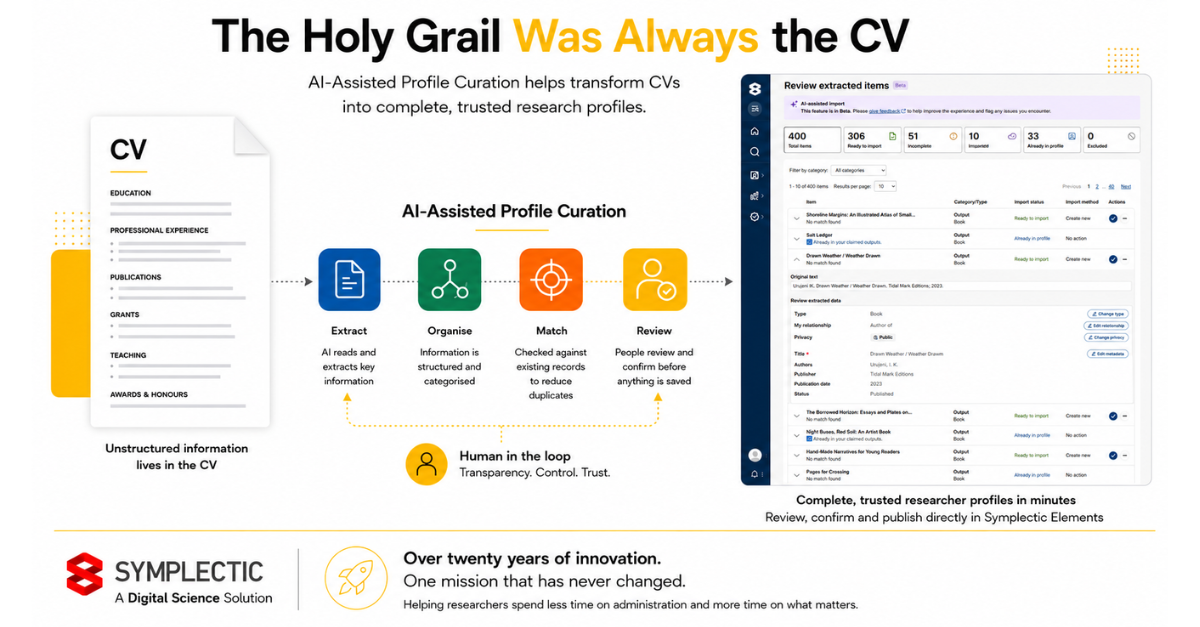
The Holy Grail Was Always the CV
How AI is helping us solve a challenge that has limited research information management for more than two decades
WritingDavidWorlock.com15 May 2026Password required
From the Information Annullus to the Impact of AI: an interview with Dr Daniel Hook, CEO, Digital Science.
In this interview, Dr Daniel Hook discusses the growing influence of AI, the challenges of information overload, and the future of digital research and innovation. Watch the interview: www.patreon.com/davidworlock/
PaperarXiv.org21 April 2026
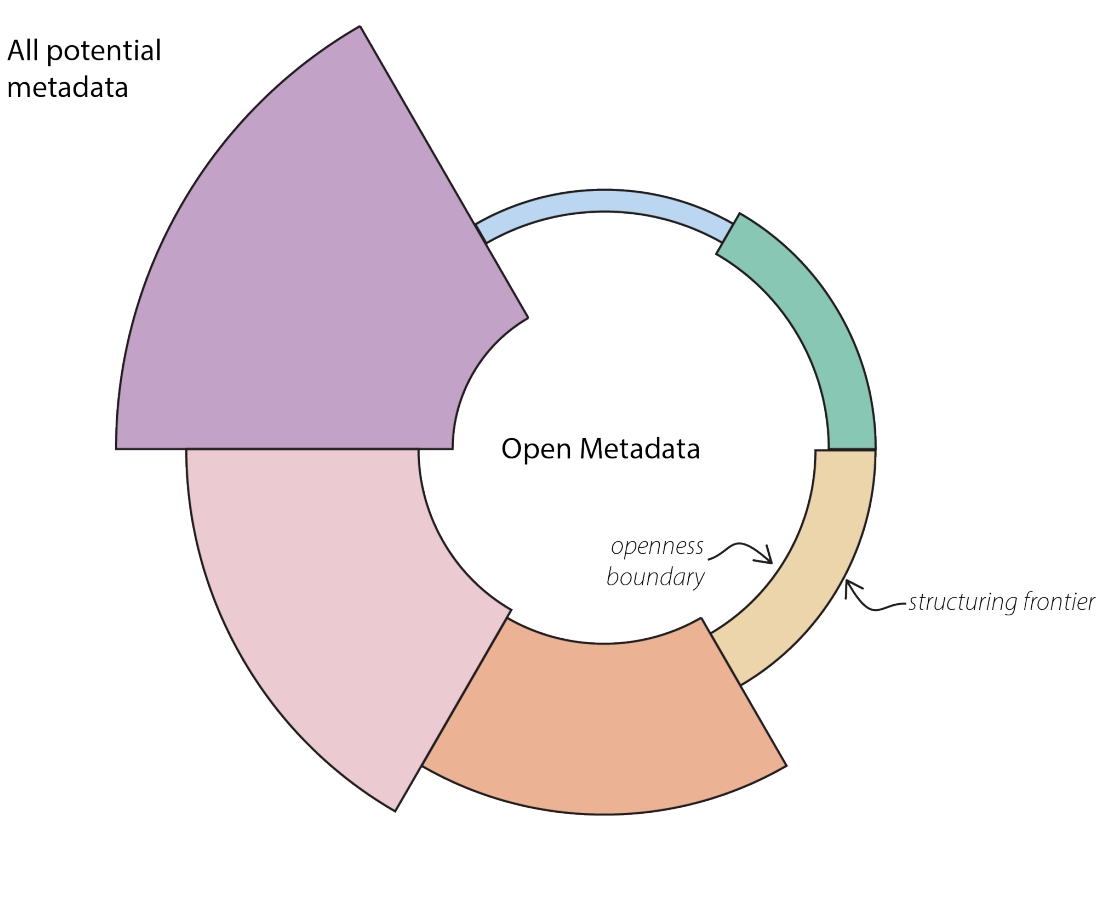
Market Dynamics, Governance and Open Research Metadata in the AI Era
The debate about scholarly knowledge infrastructure has long been framed as a contest between openness and commercial enclosure. This framing distorts both policy and practice. The real tension lies between the persistent cost of producing and refining structured metadata under deep technological friction, and the differentiated demands distinct communities place on data quality, focus and granularity. We introduce the innovation annulus: the zone between freely available structured data and the advancing frontier of commercially refined knowledge products. This zone is a permanent, functio…
ArticleDigital Science2 May 2024
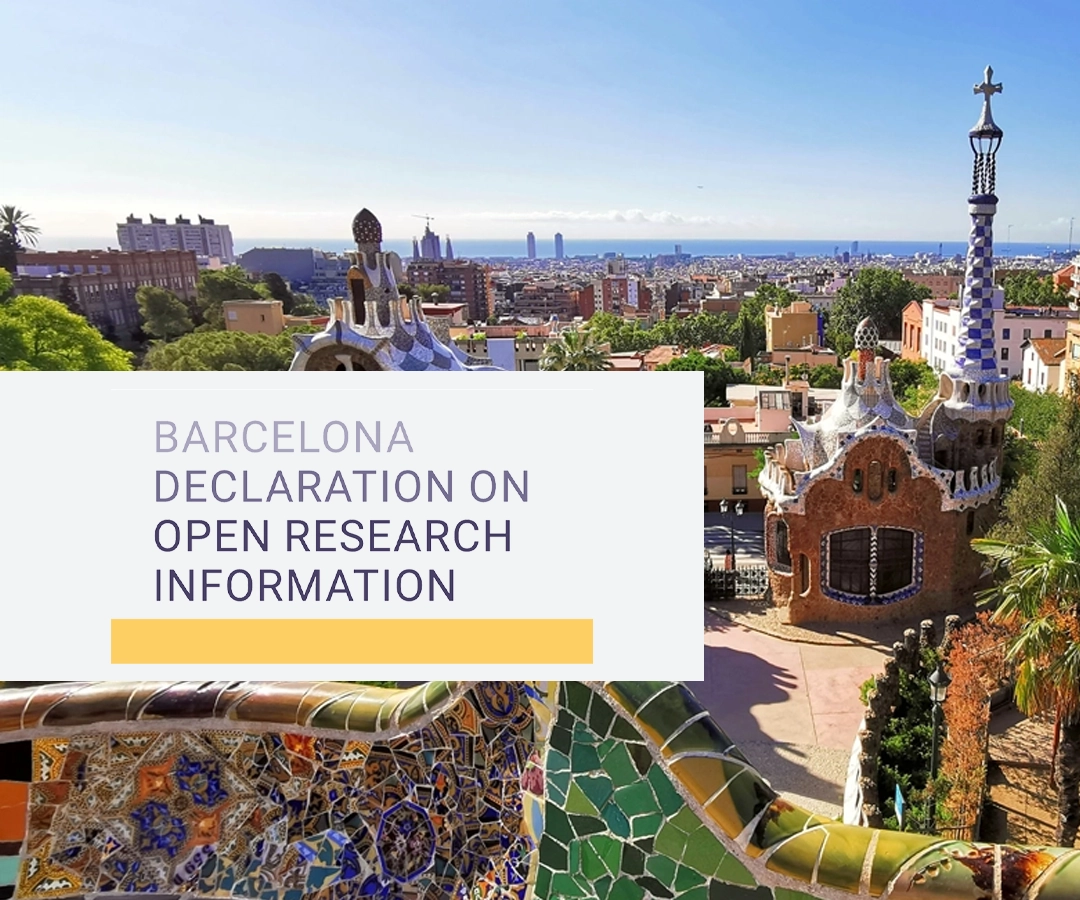
Barcelona: A beautiful horizon
Digital Science CEO Daniel Hook explores how the Barcelona Declaration will push forward openness and transparency, as well as innovation to benefit the scholarly record.
ArticleDigital Science9 March 2023
Symplectic at 20: Thoughts from Digital Science’s CEO
Digital Science CEO and co-founder of Symplectic Daniel Hook reflects on why Symplectic is a special partner within the research community.
Articledirect.mit.edu26 December 2022
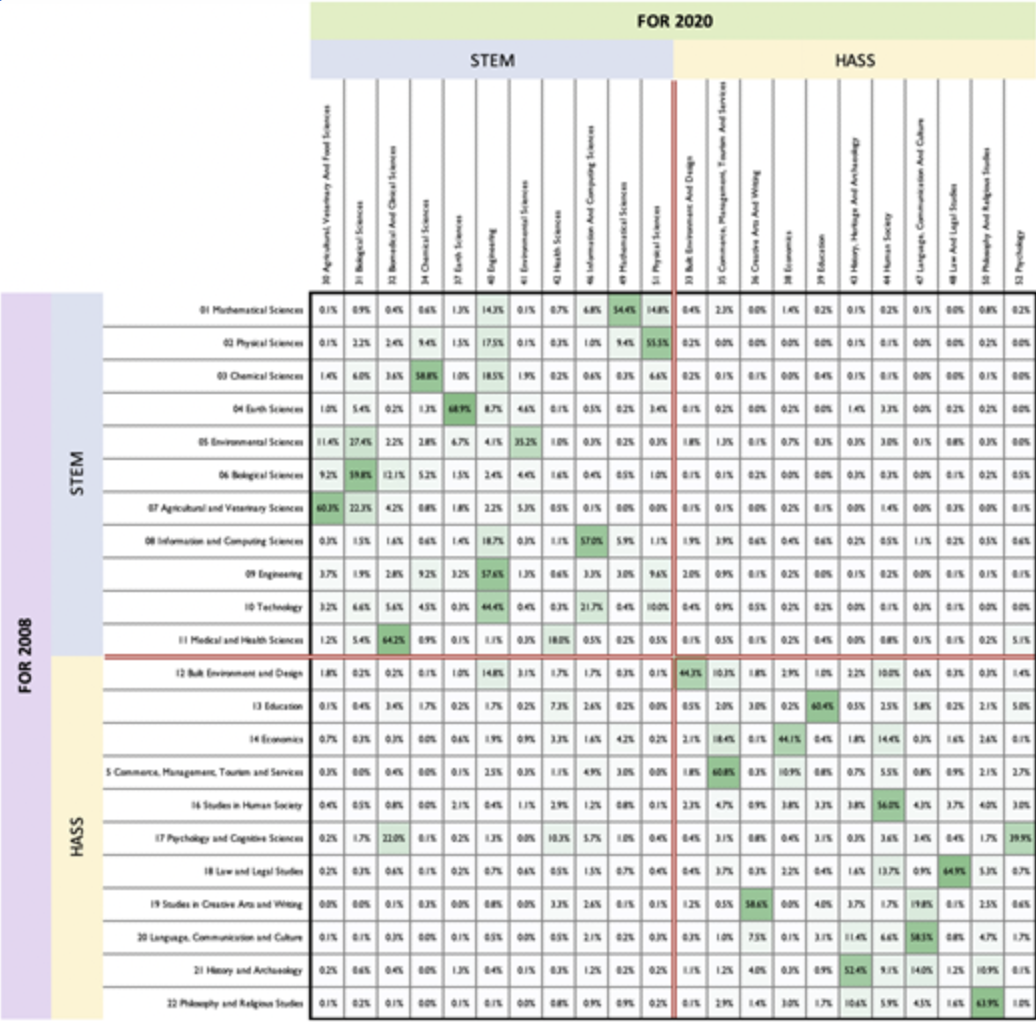
Recategorising research: Mapping from FoR 2008 to FoR 2020 in Dimensions
In 2020 the Australia New Zealand Standard Research Classification Fields of Research Codes (ANZSRC FoR codes) were updated by their owners. This has led the sector to need to update their systems of reference and has caused suppliers working in the research information sphere to need to update both systems and data. This paper focuses on the approach developed by Digital Science’s Dimensions team to the creation of an improved machine-learning training set, and the mapping of that set from FoR 2008 codes to FoR 2020 codes so that the Dimensions classification approach for the ANZSRC codes could be improved and updated.
ArticleFrontiers in Research Metrics and Analytics26 April 2022
Connecting Scientometrics: Dimensions as a Route to Broadening Context for Analyses
Modern cloud-based data infrastructures open new vistas for the deployment of scientometric data into the hands of practitioners. These infrastructures lower barriers to entry by making data more available and compute capacity more affordable.
PaperFrontiers in Research Metrics and Analytics12 January 2021
Real-Time Bibliometrics: Dimensions as a Resource for Analyzing Aspects of COVID-19
Dimensions was built as a platform to allow stakeholders in the research community, including academic bibliometricians, to more easily create and understand...
ArticleResearch Outreach15 December 2020
Digital Science: A more collaborative approach to research
Daniel Hook, CEO of Digital Science, looks to improve old research practices with new tools and technologies.
ArticleLSE Impact - Understanding impact and practice in academic research1 September 2020
From Impact to Inequality: How Post-COVID-19 government policy is privatising research innovation
Post-COVID-19 government policy has included an increase in investment in the UK’s research sector. However, Daniel Hook finds that the emphasis on the impact of this research means that longer-term, less measurable, blue skies research is being pushed into the private sector. Not only is blue skies research the key driver of technological change, but
PaperDigital Science26 August 2020
How COVID-19 is Changing Research Culture
The research world has moved faster than many would have suspected possible in response to the COVID-19 pandemic. In five months, a volume of work has been generated that even the most intensive of emergent fields have taken years to create. In our new report, How COVID-19 is Changing Research Culture, we investigate the research landscape trends and cultural changes in response to COVID-19. The report includes analysis of publication trends, geographic focal points of research, and collaboration patterns.
Articledirect.mit.edu5 December 2019
Dimensions: Bringing down barriers between scientometricians and data
Until recently, comprehensive scientometrics data has been made available only in siloed, subscription-based tools that are inaccessible to researchers who lack institutional support and resources. As a result of limited data access, research evaluation practices have focused upon basic indicators that only take publications and their citation rates into account. This has blocked innovation on many fronts.
ArticleIQOQI Vienna3 September 2019
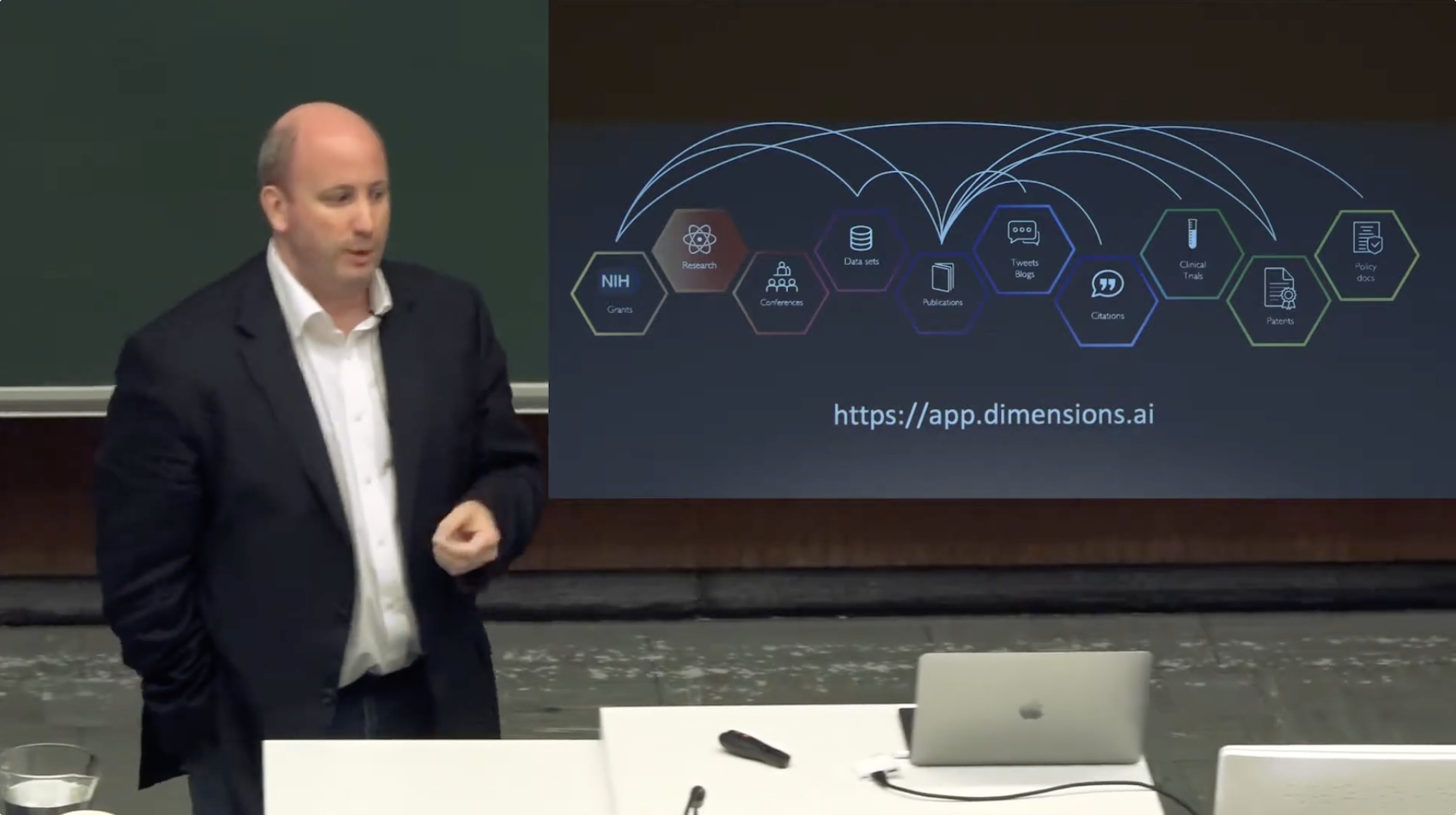
Rethinking Academia 1: Daniel Hook - Deconstructing research: a future for scholarly communication
The research paper has been around for more than 350 years and has become embedded in scholarly research as the centre of scholarly communication. However, as the fundamental relationships that define research are changing, the core of scholarly communications is under increasing pressure to change. This talk defines and discusses these fundamental relationships, the pressures that they are experiencing and examine how that could change scholarly communication.
PaperDigital Science24 January 2019
The Ascent of Open Access
This report is an analysis of the Open Access landscape since the turn of the millennium. It compares the leading countries for research outputs with those producing the most Open Access papers over a 16-year period, as well as Open Access collaboration trends.
ArticleDigital Science25 October 2016
The State of Open Data Report








* ordered by publication date, which is not the same as when any of it was written.