daniel’s theories
AI15
ClearArticleResearch Agenda7 September 2026
The Waymo effect: how AI is quietly making research less collaborative
How frictionless technologies teach us to prefer our own company – and why research leaders should worry.
ArticleSymplectic10 June 2026
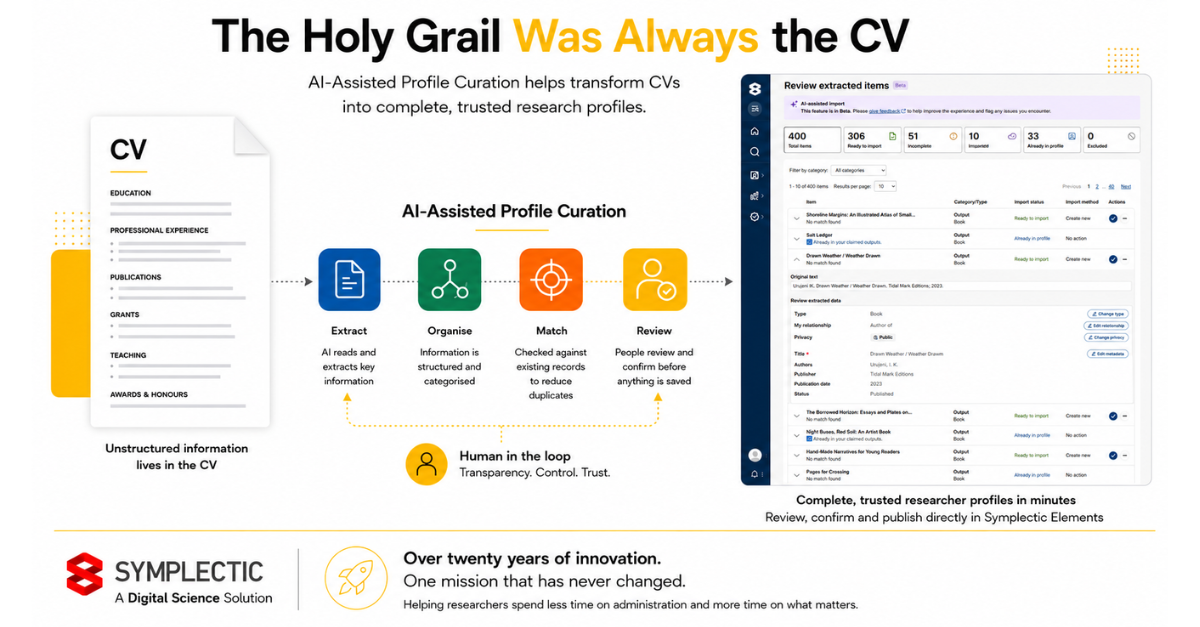
The Holy Grail Was Always the CV
How AI is helping us solve a challenge that has limited research information management for more than two decades
WritingDavidWorlock.com15 May 2026Password required
From the Information Annullus to the Impact of AI: an interview with Dr Daniel Hook, CEO, Digital Science.
In this interview, Dr Daniel Hook discusses the growing influence of AI, the challenges of information overload, and the future of digital research and innovation. Watch the interview: www.patreon.com/davidworlock/
PaperarXiv.org21 April 2026
Market Dynamics, Governance and Open Research Metadata in the AI Era
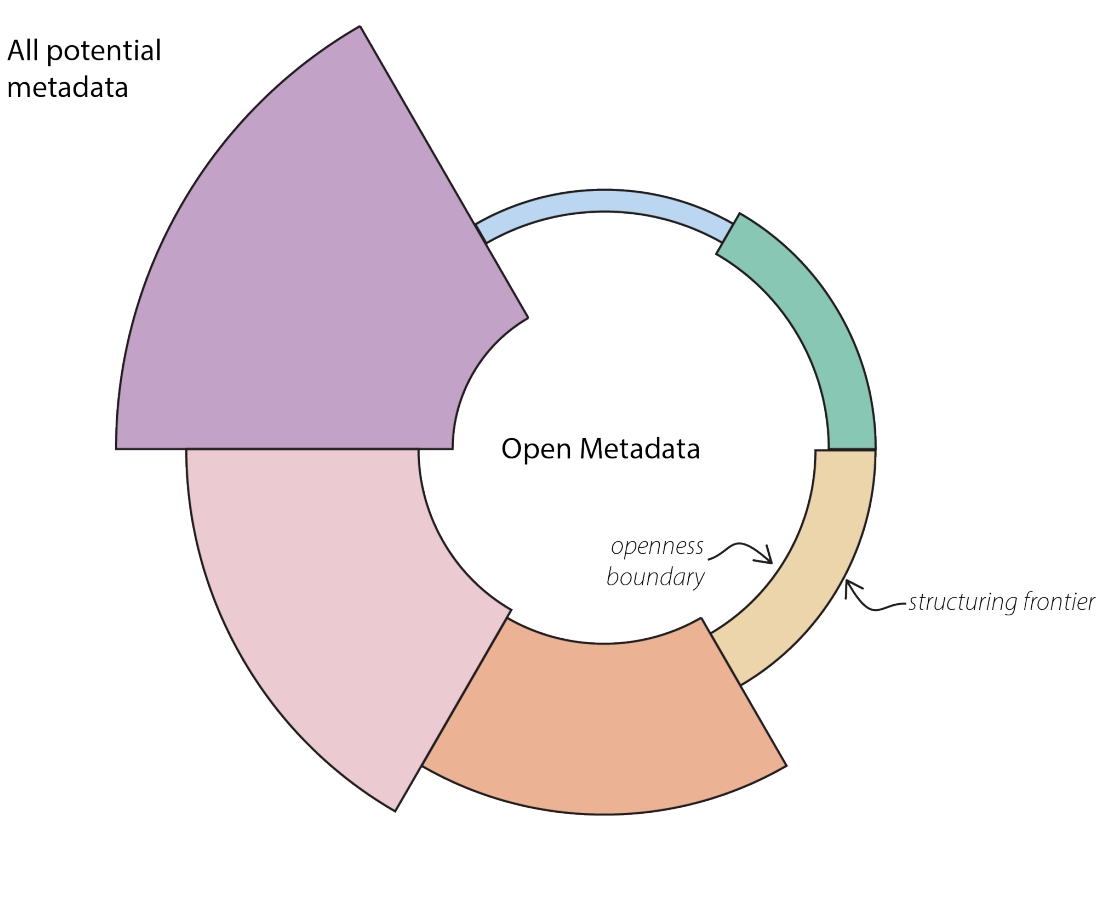
The debate about scholarly knowledge infrastructure has long been framed as a contest between openness and commercial enclosure. This framing distorts both policy and practice. The real tension lies between the persistent cost of producing and refining structured metadata under deep technological friction, and the differentiated demands distinct communities place on data quality, focus and granularity. We introduce the innovation annulus: the zone between freely available structured data and the advancing frontier of commercially refined knowledge products. This zone is a permanent, functio…
ArticleHoltzbrinck8 April 2026
The Tools That Shape Us
Language is a technology we rarely examine — a cage that shapes thought from the inside. Every communication tool rebuilds that cage: the printing press, keyword search, and now LLMs. But where earlier cages had visible bars you could trace and interrogate, the walls of a model's training data are invisible. Fluency feels like liberation. The cage has always had architects; what's new is that we can no longer see them.
TalkCBS News23 January 2026
AI Offers New Future for Research
Digital Science says artificial intelligence (AI) is transforming research and innovation, creating new possibilities for societal benefit and smart economies.
PaperDigital Science10 July 2025
Deepseek and the New Geopolitics of AI
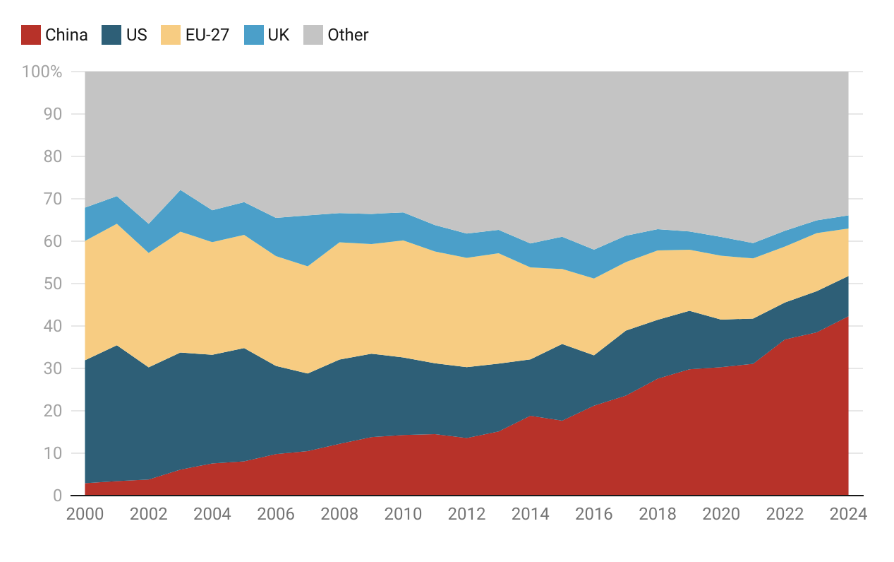
Artificial Intelligence (AI) is no longer a peripheral concern—it is a central force reshaping societies, economies, and global dynamics. As AI permeates every facet of life, from workplace automation and healthcare to surveillance and personal freedoms, its potential to yield both transformative benefits and significant harms hinges on how access to its development and knowledge is distributed. This report examines the current global research landscape of AI, focusing on four pivotal regions: China, the EU-27, the UK, and the US. Through comparative analysis, we identify key trends and geopolitical shifts, including the growing strategic importance of AI, the US's declining dominance in favour of China’s rapid ascent, and the pivotal role of international research collaboration. Notably, China emerges as the world’s central AI collaborator with a deepening talent pool and expanding research output. The UK, while smaller in scale, punches above its weight in terms of impact, while the EU-27 exhibits strong internal collaboration but limited external engagement. Our findings underscore that the trajectory of AI development—and its societal consequences—will be shaped not just by technological breakthroughs but by global patterns of collaboration, competition, and knowledge governance.
ArticleDigital Science2 May 2024
Barcelona: A beautiful horizon
Digital Science CEO Daniel Hook explores how the Barcelona Declaration will push forward openness and transparency, as well as innovation to benefit the scholarly record.
ArticleDigital Science30 October 2023
Specificity versus synthesis: An uncertainty principle for Large Language Models?
Large Language Models are known to hallucinate facts. While there is an active debate on whether this is a bug or a feature, the fact remains that we don't understand AI to the level where we can get LLMs to trace back to their motivation for making a specific pronouncement. Thus, LLM providers who work in the science space are faced with a challenge - they want to leverage the new capabilities of LLMs but need somehow to create references back to the original work, but in forcing an LLM to work in a way that creates referencability, one destroys its ability to create a synthesis from multiple sources, creating a fundamental playoff between specificity and synthesis.
ArticleDigital Science27 June 2023
The lone banana problem. Or, the new programming: “speaking” AI
The effects of new technology are seldom either solely positive or solely negative and, as such, there is a responsibility that sits with those that develop technology to consider how it will be used. Underlying that responsibility sits a need to deeply understand technology. The recent rise of Large Language Models (LLMs) and its rapid adoption begs many questions about whether we understand the technology and whether we understand how it will impact us at a cultural, societal, or economic level. When I have written before on this topic I have noted that it is not the large biases that are…
ArticleDigital Science9 May 2023
Tinker, researcher, prompter, wizard
Until six months ago most of us probably hadn’t placed the words “prompt” and “engineer” in close proximity (except possibly for anyone involved in a construction project where a colleague had arrived to work consistently on time). Today, a “prompt engineer” is one of a new class of emerging jobs in a Large Language Model (LLM)-fueled world. Paid in the “telephone-number”-salary region, a prompt engineer is a modern day programmer-cum-wizard who understands how to make an AI do their bidding.
TalkDeSci Foundation8 May 2023
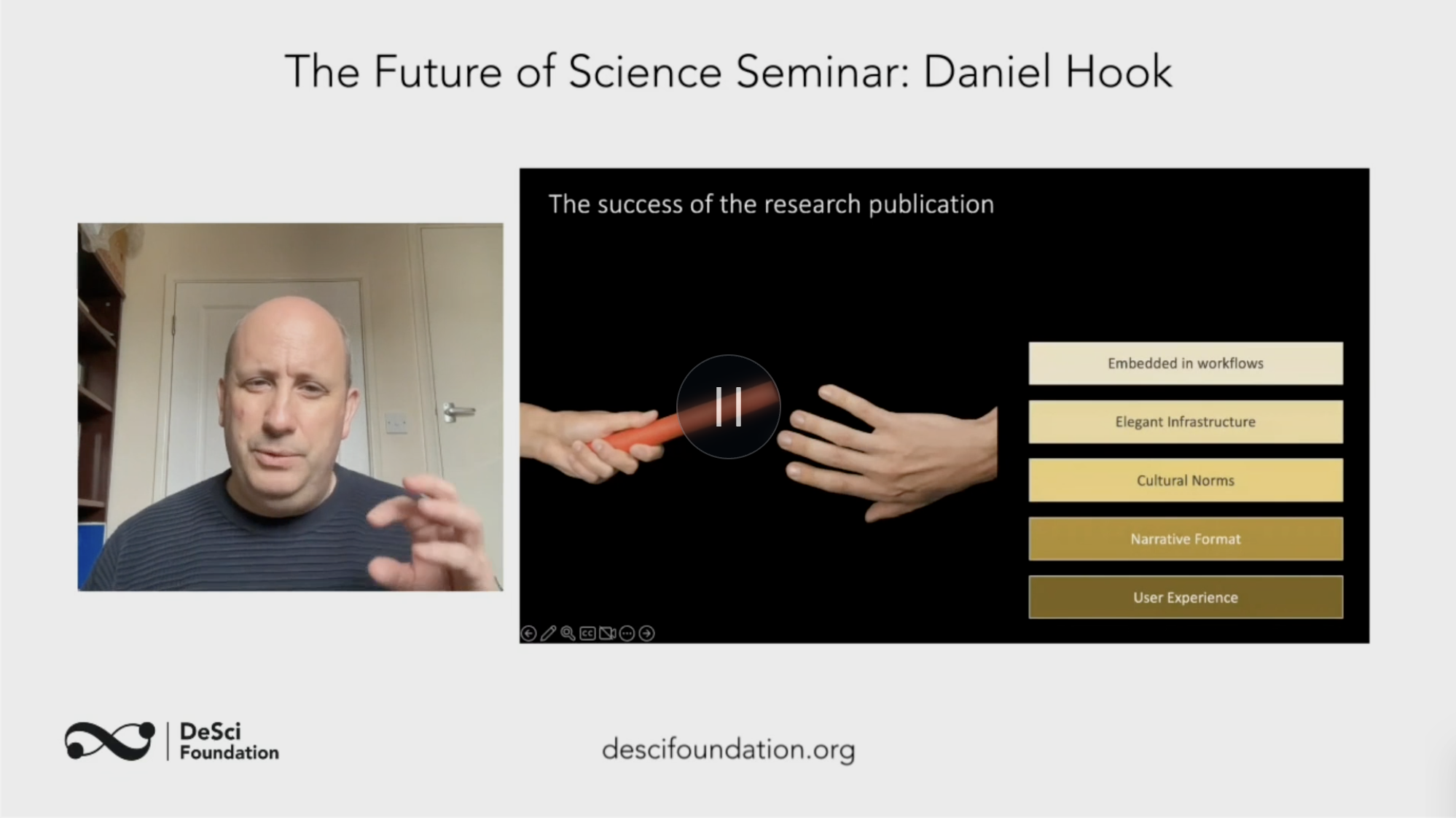
Scholarly Communication at the Dawn of Exponential Revolution
It is clear that we are entering a new phase of technological growth: Not an industrial revolution of the type that we have seen before but an exponential revolution awaits with all the challenges and wonders that entails. An abundance of data coupled with sophisticated tools for both capturing and analysing data has transformed research over the last half century. And yet, scholarly communication is still reliant on 17th Century technology. In this seminar we examine why this is the case and what the future of scholarly communication could look like.
Articledirect.mit.edu26 December 2022
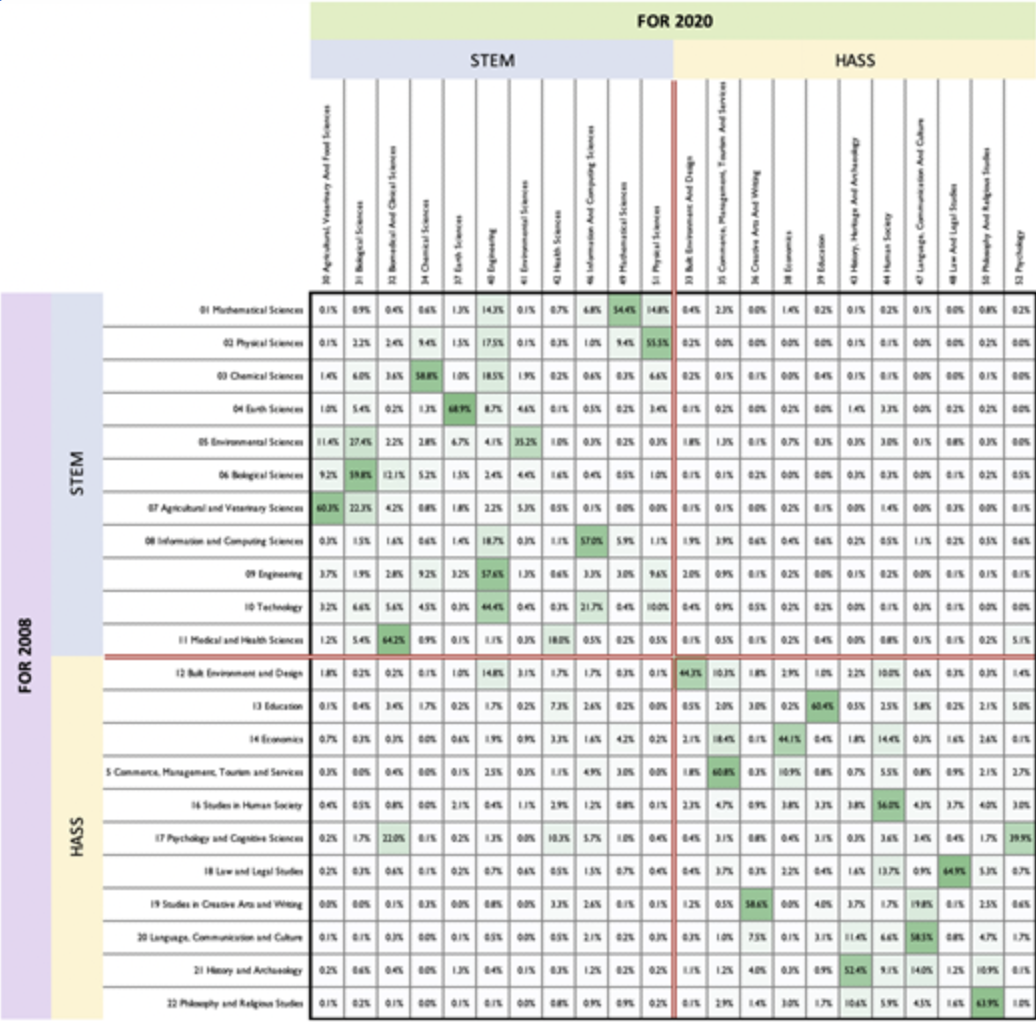
Recategorising research: Mapping from FoR 2008 to FoR 2020 in Dimensions
In 2020 the Australia New Zealand Standard Research Classification Fields of Research Codes (ANZSRC FoR codes) were updated by their owners. This has led the sector to need to update their systems of reference and has caused suppliers working in the research information sphere to need to update both systems and data. This paper focuses on the approach developed by Digital Science’s Dimensions team to the creation of an improved machine-learning training set, and the mapping of that set from FoR 2008 codes to FoR 2020 codes so that the Dimensions classification approach for the ANZSRC codes could be improved and updated.
PaperFrontiers in Research Metrics and Analytics12 January 2021
Real-Time Bibliometrics: Dimensions as a Resource for Analyzing Aspects of COVID-19
Dimensions was built as a platform to allow stakeholders in the research community, including academic bibliometricians, to more easily create and understand...
ArticleLSE Impact - Understanding impact and practice in academic research1 September 2020
From Impact to Inequality: How Post-COVID-19 government policy is privatising research innovation
Post-COVID-19 government policy has included an increase in investment in the UK’s research sector. However, Daniel Hook finds that the emphasis on the impact of this research means that longer-term, less measurable, blue skies research is being pushed into the private sector. Not only is blue skies research the key driver of technological change, but







* ordered by publication date, which is not the same as when any of it was written.