daniel’s theories
Papers18
ClearPaperarXiv.org21 April 2026
Market Dynamics, Governance and Open Research Metadata in the AI Era
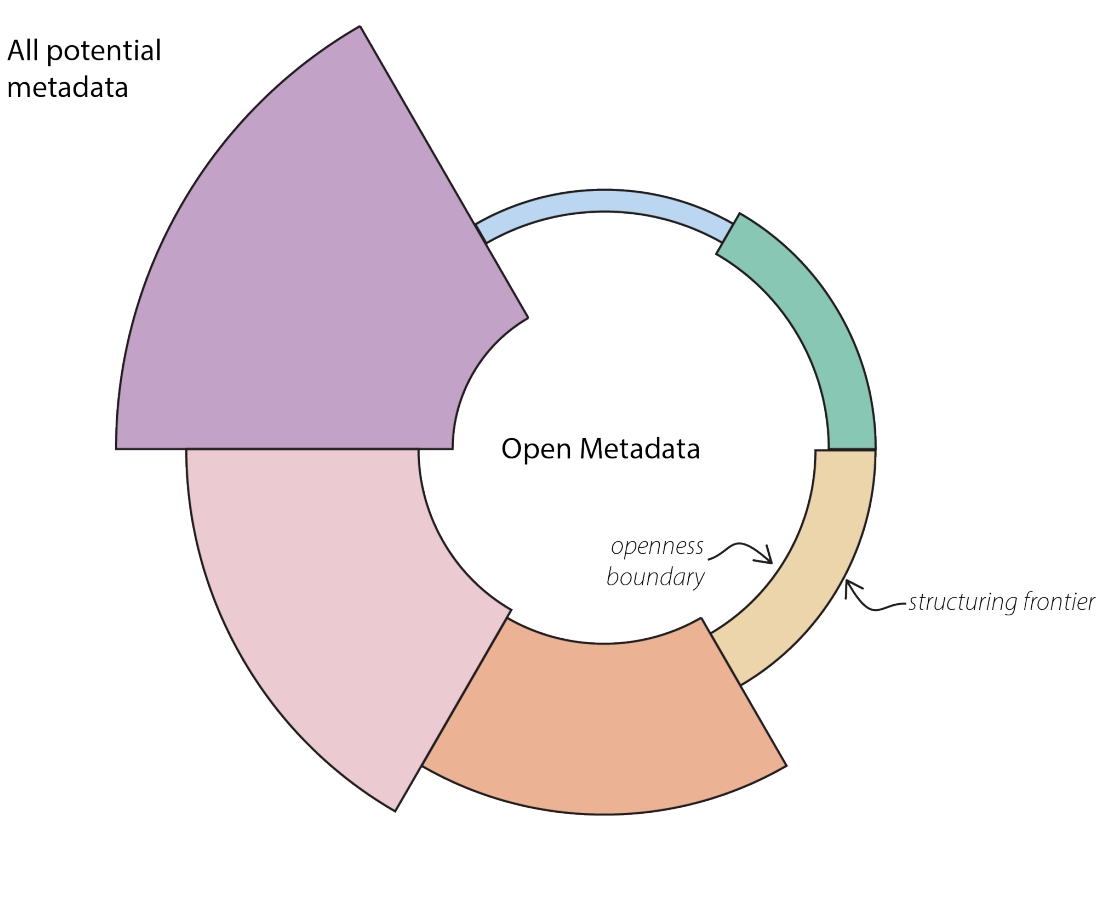
The debate about scholarly knowledge infrastructure has long been framed as a contest between openness and commercial enclosure. This framing distorts both policy and practice. The real tension lies between the persistent cost of producing and refining structured metadata under deep technological friction, and the differentiated demands distinct communities place on data quality, focus and granularity. We introduce the innovation annulus: the zone between freely available structured data and the advancing frontier of commercially refined knowledge products. This zone is a permanent, functio…
PaperDigital Science10 July 2025
Deepseek and the New Geopolitics of AI
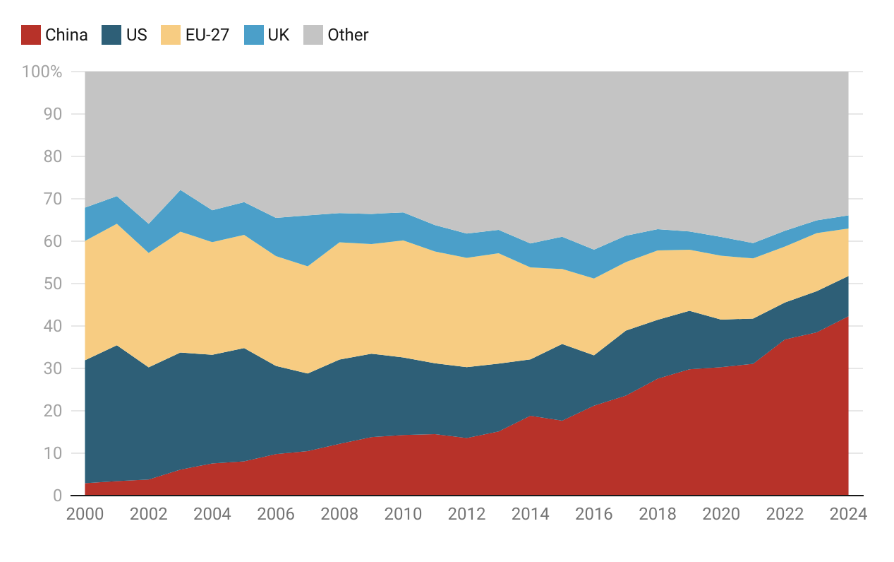
Artificial Intelligence (AI) is no longer a peripheral concern—it is a central force reshaping societies, economies, and global dynamics. As AI permeates every facet of life, from workplace automation and healthcare to surveillance and personal freedoms, its potential to yield both transformative benefits and significant harms hinges on how access to its development and knowledge is distributed. This report examines the current global research landscape of AI, focusing on four pivotal regions: China, the EU-27, the UK, and the US. Through comparative analysis, we identify key trends and geopolitical shifts, including the growing strategic importance of AI, the US's declining dominance in favour of China’s rapid ascent, and the pivotal role of international research collaboration. Notably, China emerges as the world’s central AI collaborator with a deepening talent pool and expanding research output. The UK, while smaller in scale, punches above its weight in terms of impact, while the EU-27 exhibits strong internal collaboration but limited external engagement. Our findings underscore that the trajectory of AI development—and its societal consequences—will be shaped not just by technological breakthroughs but by global patterns of collaboration, competition, and knowledge governance.
PaperarXiv.org28 January 2025
Understanding the importance of SHAPE to the UK research ecosystem
The UK has a long-established reputation for excellence in research across a broad range of fields, but in recent years, there has been greater emphasis on STEM investment and greater recognition of the UK's success in STEM. This paper examines the relative strengths of SHAPE disciplines and demonstrates that the UK's SHAPE research portfolio outperforms the UK's STEM research, for each international benchmark considered in this work. It is argued that SHAPE research is becoming increasingly important as a partner to STEM as the widespread use of technology creates societal challenges. It is also argued that the strength of UK SHAPE is the basis of a strategic advantage for UK research.
PaperarXiv.org9 April 2024
The Rise and Fall of the Initial Era
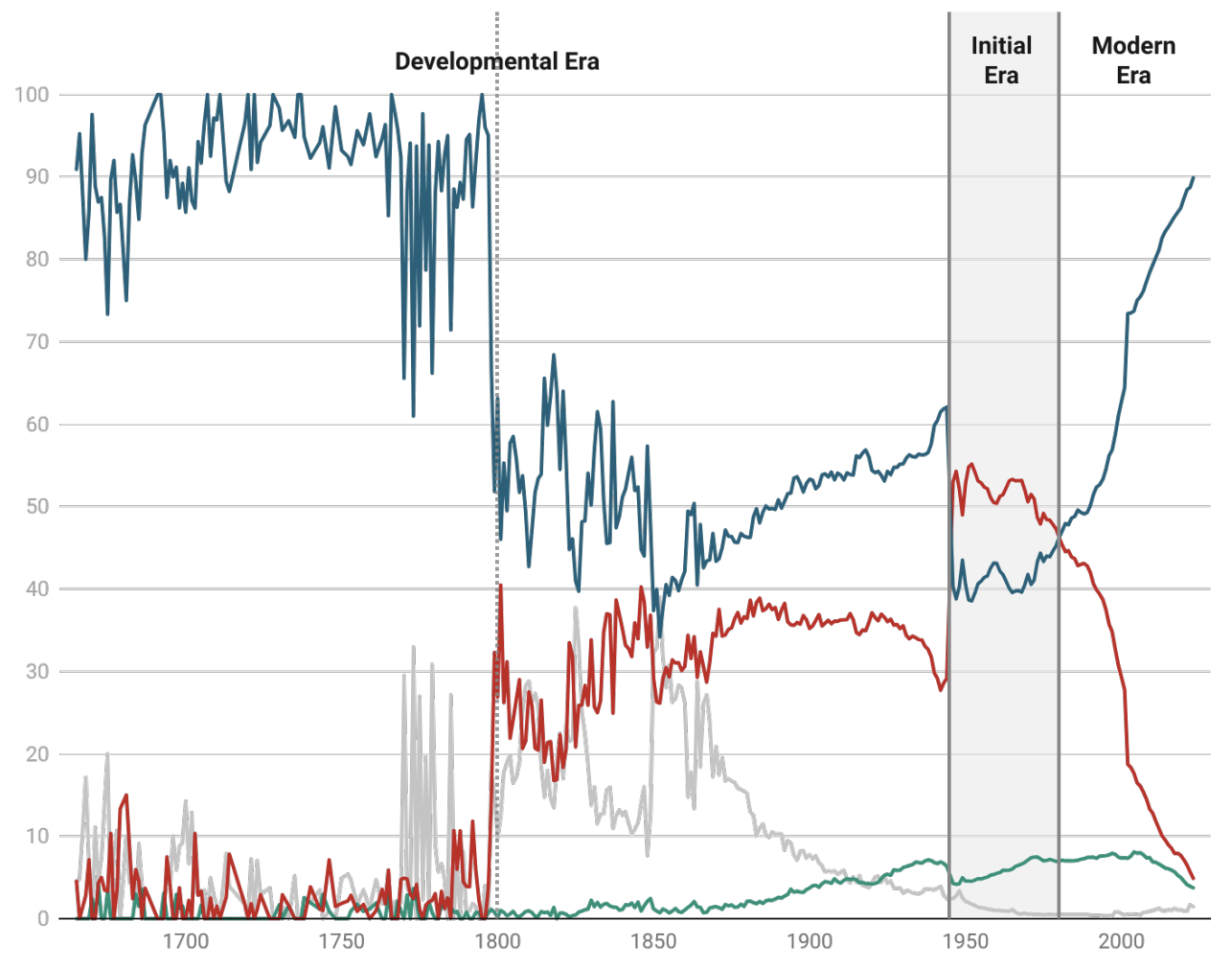
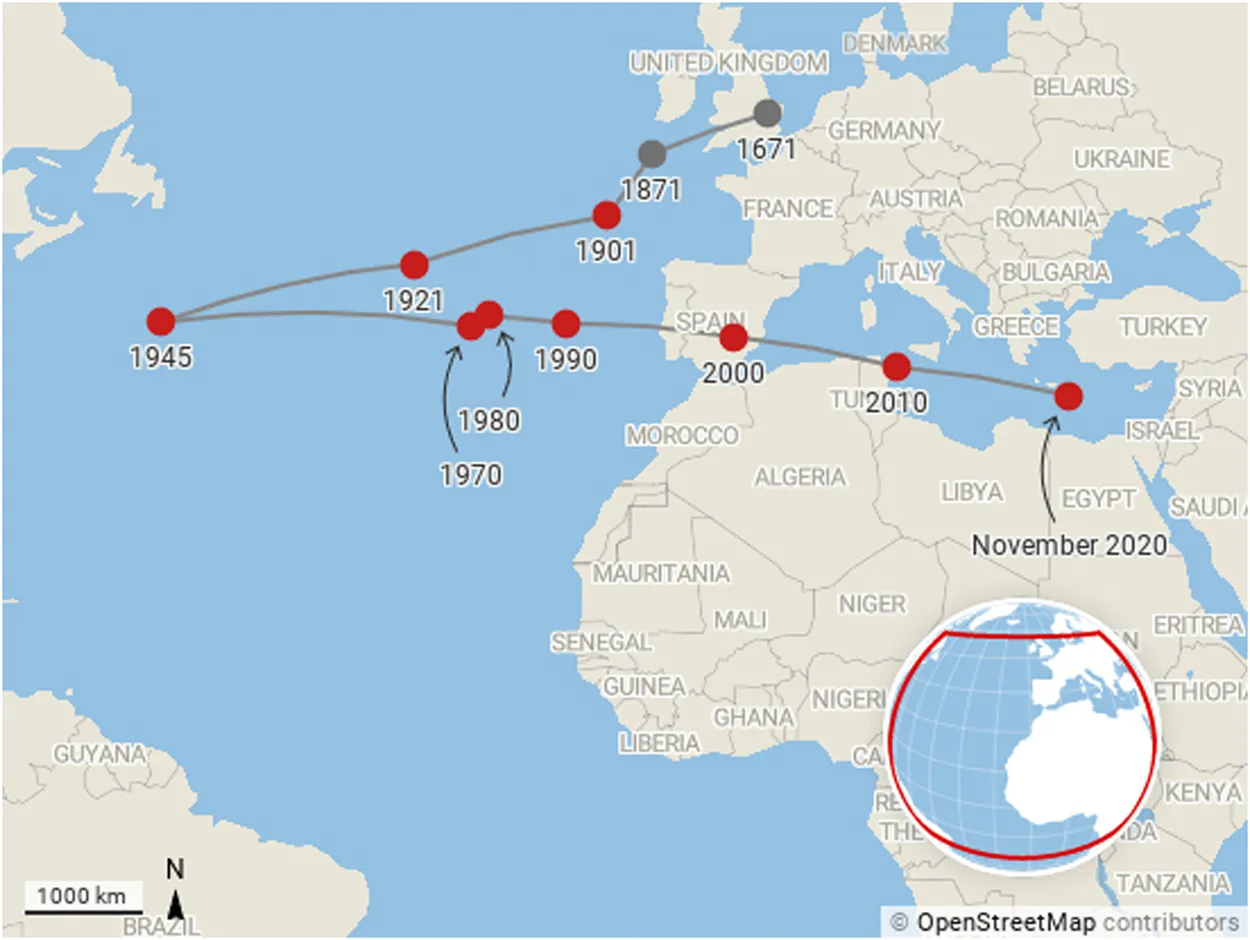
Bibliographic data is a rich source of information that goes beyond the use cases of location and citation -- it also encodes both cultural and technological context. For most of its existence, the scholarly record has changed slowly and hence provides an opportunity to gain insight through its reflection of the cultural norms of the research community over the last four centuries. While it is often difficult to distinguish the originating driver of change, it is still valuable to consider the motivating influences that have led to changes in the structure of the scholarly record. An "initial era" is identified during which initials were used in preference to full names by authors on scholarly communications. Causes of the emergence and demise of this era are considered as well as the implications of this era on research culture and practice.
PaperSage13 February 2023
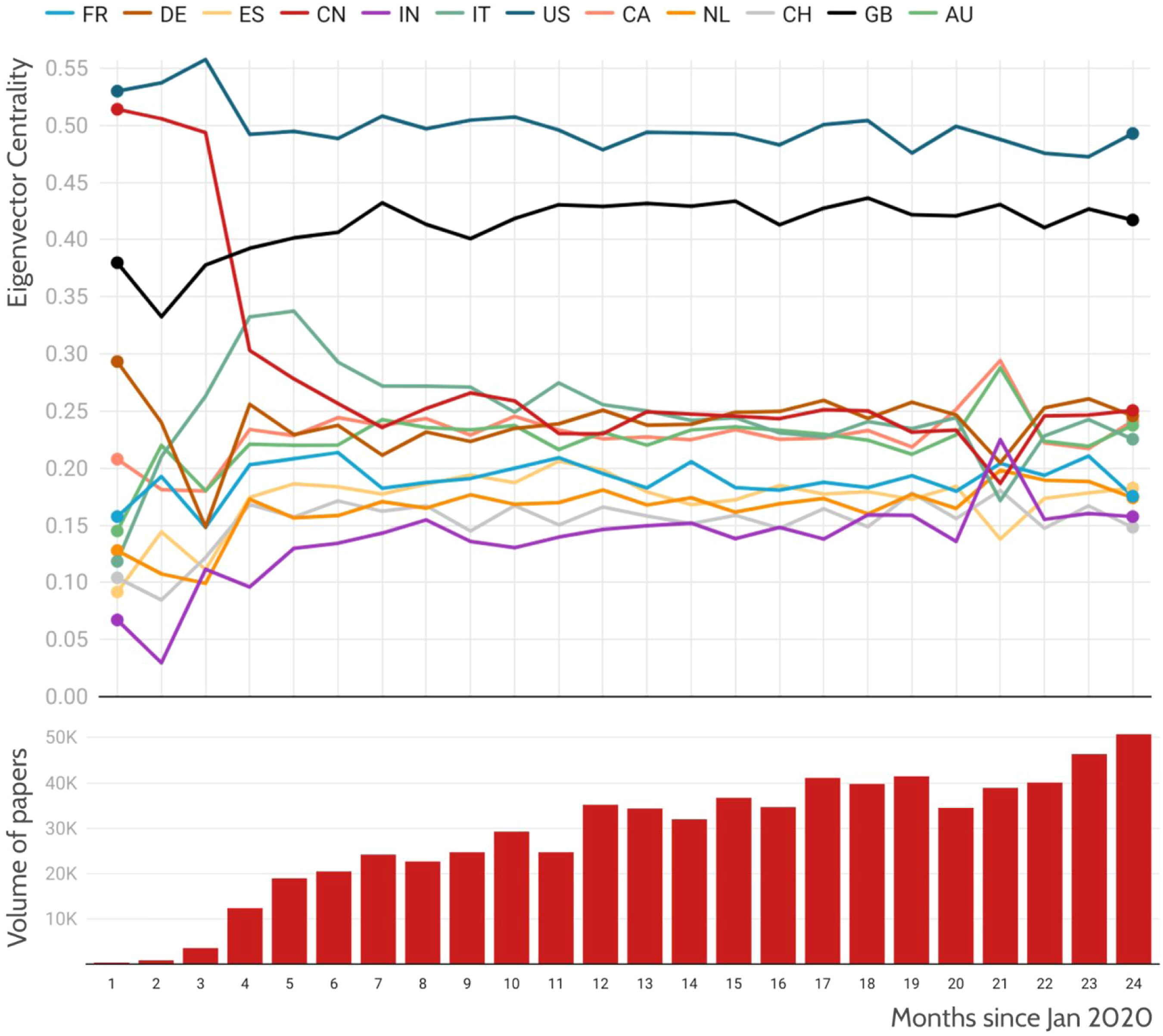
The pandemic veneer: COVID-19 research as a mobilisation of collective intelligence by the global research community
The global research community responded with speed and at scale to the emergence of COVID-19, with around 4.6% of all research outputs in 2020 related to the pandemic. That share almost doubled through 2021, to reach 8.6% of research outputs.
PaperFrontiers in Research Metrics and Analytics1 June 2022
Editorial: Trust and Infrastructure in Scholarly Communications
When Dickens wrote: “It was the best of times, it was the worst of times” in A Tale of Two Cities, he was describing the effects of two separate but linked revolutions—one in the UK where industrialization and technology had changed the social fabric as cities garnered population at the expense of their rural surroundings; and the other in France, were bloody revolution had overthrown the ancien régime, only to replace it with a new reign of terror. Today, we stand at the beginning of the first exponential industrial revolution.
PaperFrontiers in Research Metrics and Analytics14 April 2021
Scaling Scientometrics: Dimensions on Google BigQuery as an Infrastructure for Large-Scale Analysis
Cloud computing has the capacity to transform many parts of the research ecosystem, from particular research areas to overall strategic decision making and policy. Scientometrics sits at the boundary between research and the decision-making, policy-making, and evaluation processes that underpin research.
PaperFrontiers in Research Metrics and Analytics12 January 2021
Real-Time Bibliometrics: Dimensions as a Resource for Analyzing Aspects of COVID-19
Dimensions was built as a platform to allow stakeholders in the research community, including academic bibliometricians, to more easily create and understand...
PaperDigital Science26 August 2020
How COVID-19 is Changing Research Culture
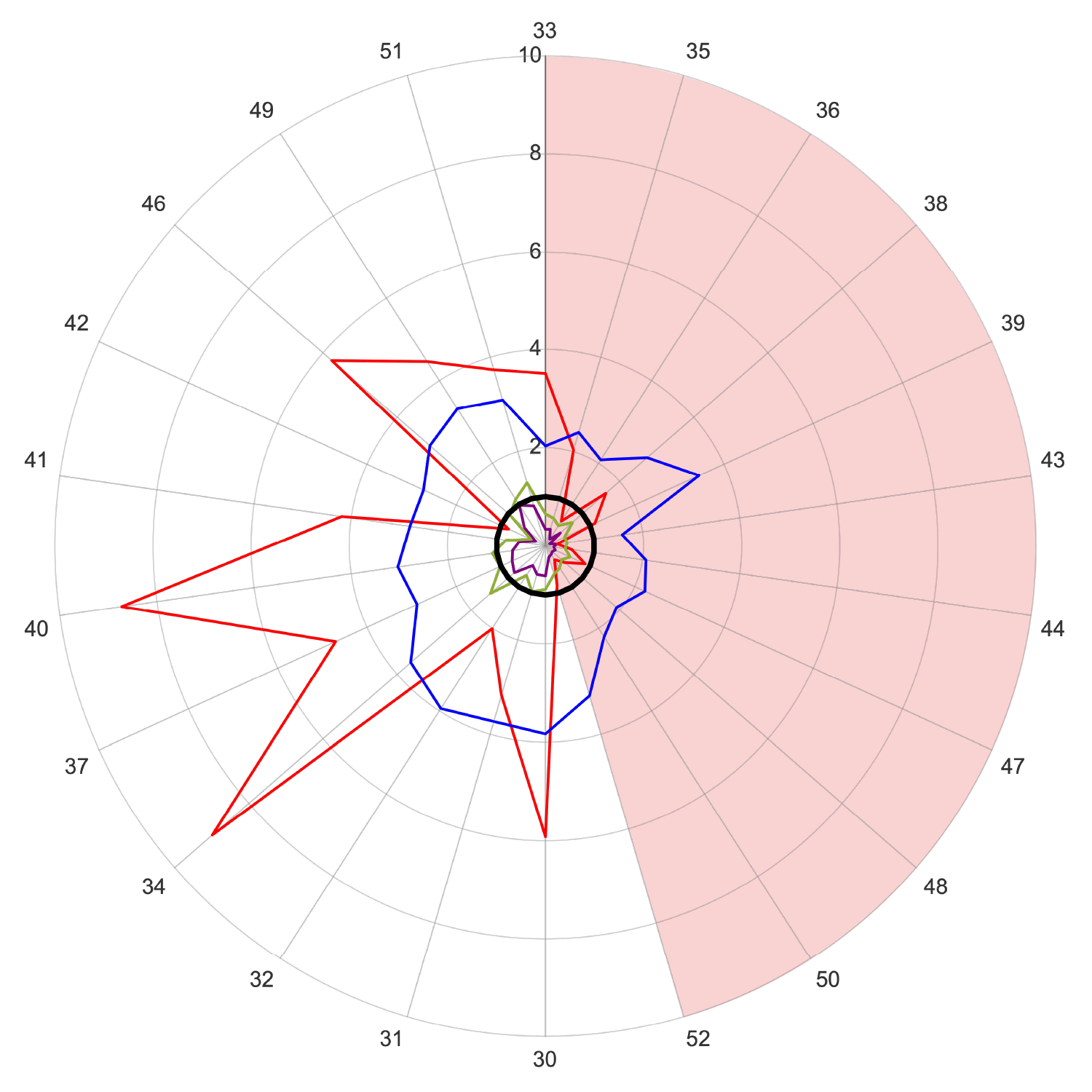
The research world has moved faster than many would have suspected possible in response to the COVID-19 pandemic. In five months, a volume of work has been generated that even the most intensive of emergent fields have taken years to create. In our new report, How COVID-19 is Changing Research Culture, we investigate the research landscape trends and cultural changes in response to COVID-19. The report includes analysis of publication trends, geographic focal points of research, and collaboration patterns.
PaperDigital Science7 May 2020
Contextualizing Sustainable Development Research
This report highlights the growth in research around the UN’s Sustainable Development Goals (SDGs). We believe the SDGs are now more relevant than ever, for they provide a framework for recovery from the current pandemic. In the report we ask, if we are to have an impact agenda for research, should it not be one that is informed by the SDGs? And if so, should we not be actively measuring sustainable development as part of research evaluation?
PaperPLOS ONE28 May 2019
Perception, prestige and PageRank
Academic prestige is difficult to quantify in objective terms. Network theory offers the opportunity to use a mathematical formalism to model both the prestige associated with an academic and the relationships between academic colleagues. Early attempts using this line of reasoning have focused on intellectual genealogy as constituted by supervisor student networks. The process of examination is critical in many areas of study but has not played a part in existing models. A network theoretical “social” model is proposed as a tool to explore and understand the dynamics of prestige in the academy.
PaperDigital Science1 April 2019
Precision Medicine, An International Perspective
This report provides a brief overview of the area of personalised and precision medicine since the turn of the millennium, highlighting key areas of development in publication activity. It has been produced in celebration of the Russian-German Science Dialogue and in combination with Merck’s 120th Anniversary in Russia. As a result, we pay particular attention to these countries.
PaperDigital Science11 February 2019
Japanese Collaboration in the Global Research Landscape
Japan finds itself in a difficult position regarding ongoing funding for research in turbulent financial times but is starting to be much more active on the world stage. The indicators show a positive future for Japan if the leadership of top researchers can cascade down to the broader research population and make Japan much more outward bound in its research collaboration landscape. If this is supported by funders with innovative approaches to funding and incentivising Japan’s increased engagement and visibility on the world research stage then Japan looks forward to a prosperous and important place in the global knowledge economy.
PaperDigital Science24 January 2019
The Ascent of Open Access
This report is an analysis of the Open Access landscape since the turn of the millennium. It compares the leading countries for research outputs with those producing the most Open Access papers over a 16-year period, as well as Open Access collaboration trends.
PaperDigital Science17 September 2018
The Fourth Age of Research in Australasia
In this report, we take a new look at international collaboration patterns focussing on the Australasian region. More than other regions in the world, Australasia has always been outward looking and its research community has sought to connect itself with international partners. This is, no doubt, in part due to the geographical location of the continent but other factors play a role including the heavy development of Australasia’s research base in the last few years and the importance and power of that research base as an economic driver for the region. More recently, a coherent focus has been taken across the region to international engagement. We have used Digital Science’s Dimensions database together with a filter of high-quality journals provided by the Nature Index journal list to explore the national and international collaboration landscape in Australia and New Zealand.
PaperDigital Science8 May 2017
Digital Research Report: The Landscape of Climate Research Funding
The USA government proposes policy and funding changes around environmental protection and climate research. As is often the case, it will be difficult to assess the impact until years after the policy has been enacted. However, funding data provide us with a more proximate bellwether than the traditional research analytics. In this report, we profile the balance of ‘climate research’ investment and note its impact on a diverse research portfolio that runs from ecology and atmospherics to economics and public health. We explore the use of funding data as an analytical source, track the growth of ‘climate change’ as a topic and differentiate this from ‘global warming’. We also disaggregate funding across fields of research and demonstrate a research shift from global climate to biological impact and adaptation and, now, towards response and mitigation. The data highlight the ratio between a relatively small pool of research funds and its support of a much greater infrastructure for monitoring, regulation and response. The USA is identified as the largest single source of research grants, although European funds are growing rapidly. The USA provides key support and data worldwide, and may have been agile in shifting from background research into adaptation and mitigation. USA policy change could undermine many other efforts. The global research effort is shared because the climate is shared; so should be the responsibility to sustain these commitments.
PaperDigital Science14 March 2017
The Connected Culture of Collaboration Report
Overleaf, a collaborative writing and publishing platform that makes the process of writing, editing and publishing academic papers quicker and easier, has released this report which takes an in-depth look at active collaborative research patterns. Rather than examining post-published collaboration patterns, “The Connected Culture of Collaboration” explores new, real-time information on collaboration to provide insights on collaboration patterns on national, state and institution-level scales. The report features a number of thought leadership contributions and includes a foreword from Laurel Haak, Executive Director, ORCID. The report focuses on the varying aspects of collaboration: how collaboration is valued in science, the role of university libraries in research communication, and how the growth of open access facilitates collaboration.
PaperDigital Science18 May 2016
Examining Implications of Brexit for the UK Research Base
Independent data research by Digital Science reveals that leading British institutions and companies, including the University of Cambridge, the University of Oxford, Rolls-Royce, BT and the BBC, could stand to lose significant EU funding for R&D if the UK government doesn’t plug the gap.










* ordered by publication date, which is not the same as when any of it was written.