daniel’s theories
Innovation10
ClearArticleResearch Agenda7 September 2026
The Waymo effect: how AI is quietly making research less collaborative
How frictionless technologies teach us to prefer our own company – and why research leaders should worry.
WritingDavidWorlock.com15 May 2026Password required
From the Information Annullus to the Impact of AI: an interview with Dr Daniel Hook, CEO, Digital Science.
In this interview, Dr Daniel Hook discusses the growing influence of AI, the challenges of information overload, and the future of digital research and innovation. Watch the interview: www.patreon.com/davidworlock/
PaperarXiv.org21 April 2026
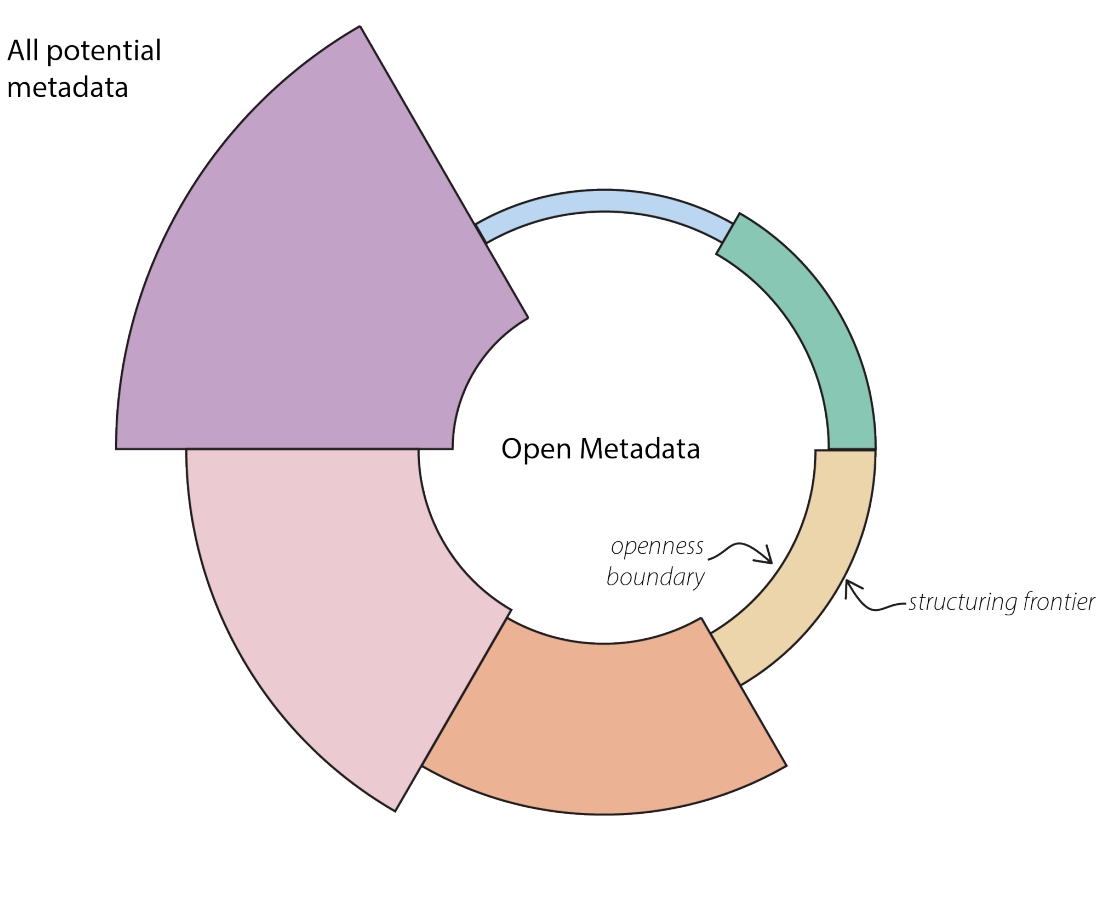
Market Dynamics, Governance and Open Research Metadata in the AI Era
The debate about scholarly knowledge infrastructure has long been framed as a contest between openness and commercial enclosure. This framing distorts both policy and practice. The real tension lies between the persistent cost of producing and refining structured metadata under deep technological friction, and the differentiated demands distinct communities place on data quality, focus and granularity. We introduce the innovation annulus: the zone between freely available structured data and the advancing frontier of commercially refined knowledge products. This zone is a permanent, functio…
ArticleDigital Science2 May 2024
Barcelona: A beautiful horizon
Digital Science CEO Daniel Hook explores how the Barcelona Declaration will push forward openness and transparency, as well as innovation to benefit the scholarly record.
TalkDeSci Foundation8 May 2023
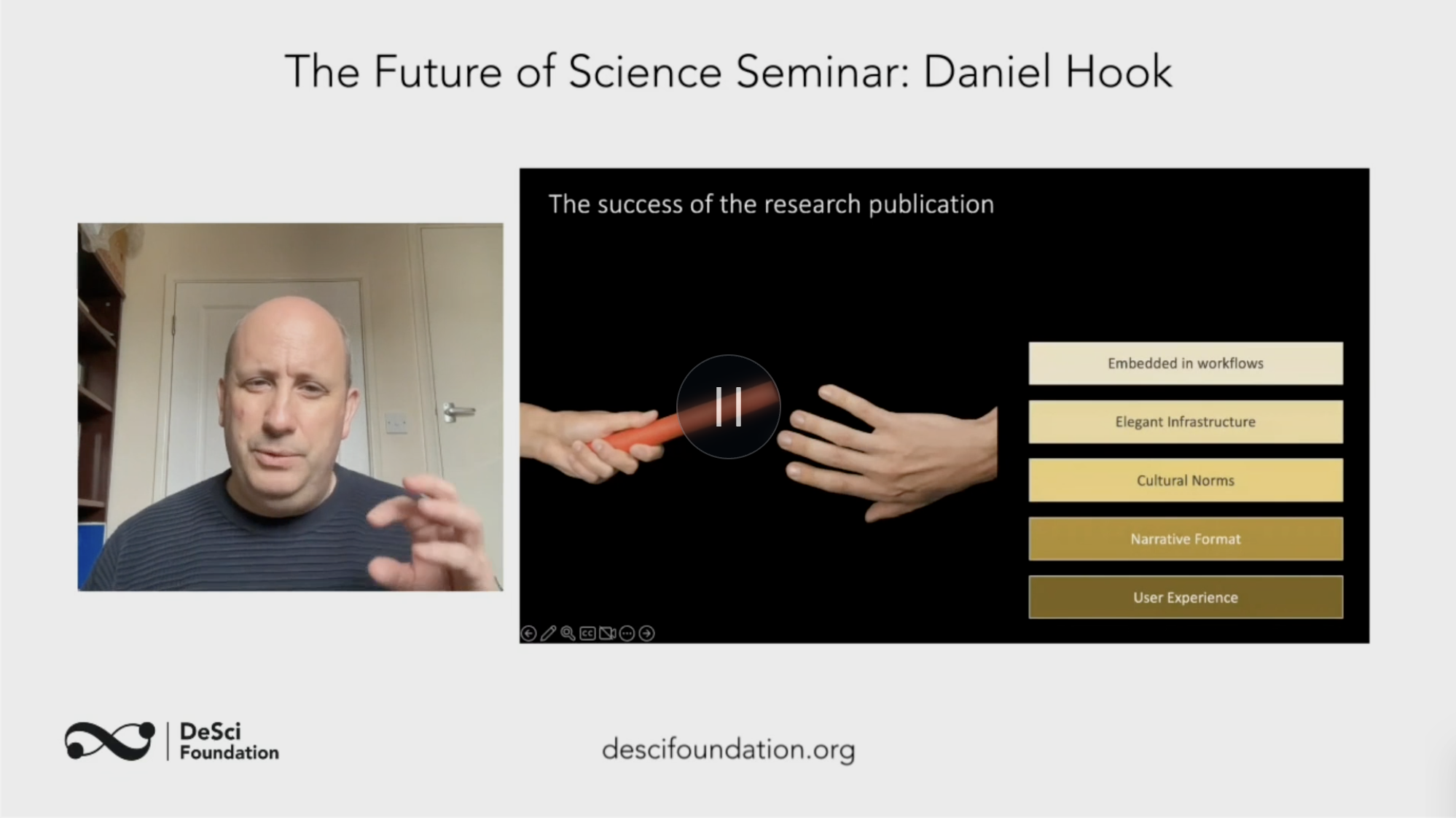
Scholarly Communication at the Dawn of Exponential Revolution
It is clear that we are entering a new phase of technological growth: Not an industrial revolution of the type that we have seen before but an exponential revolution awaits with all the challenges and wonders that entails. An abundance of data coupled with sophisticated tools for both capturing and analysing data has transformed research over the last half century. And yet, scholarly communication is still reliant on 17th Century technology. In this seminar we examine why this is the case and what the future of scholarly communication could look like.
ArticleDigital Science9 March 2023
Symplectic at 20: Thoughts from Digital Science’s CEO
Digital Science CEO and co-founder of Symplectic Daniel Hook reflects on why Symplectic is a special partner within the research community.
PaperSage13 February 2023
The pandemic veneer: COVID-19 research as a mobilisation of collective intelligence by the global research community
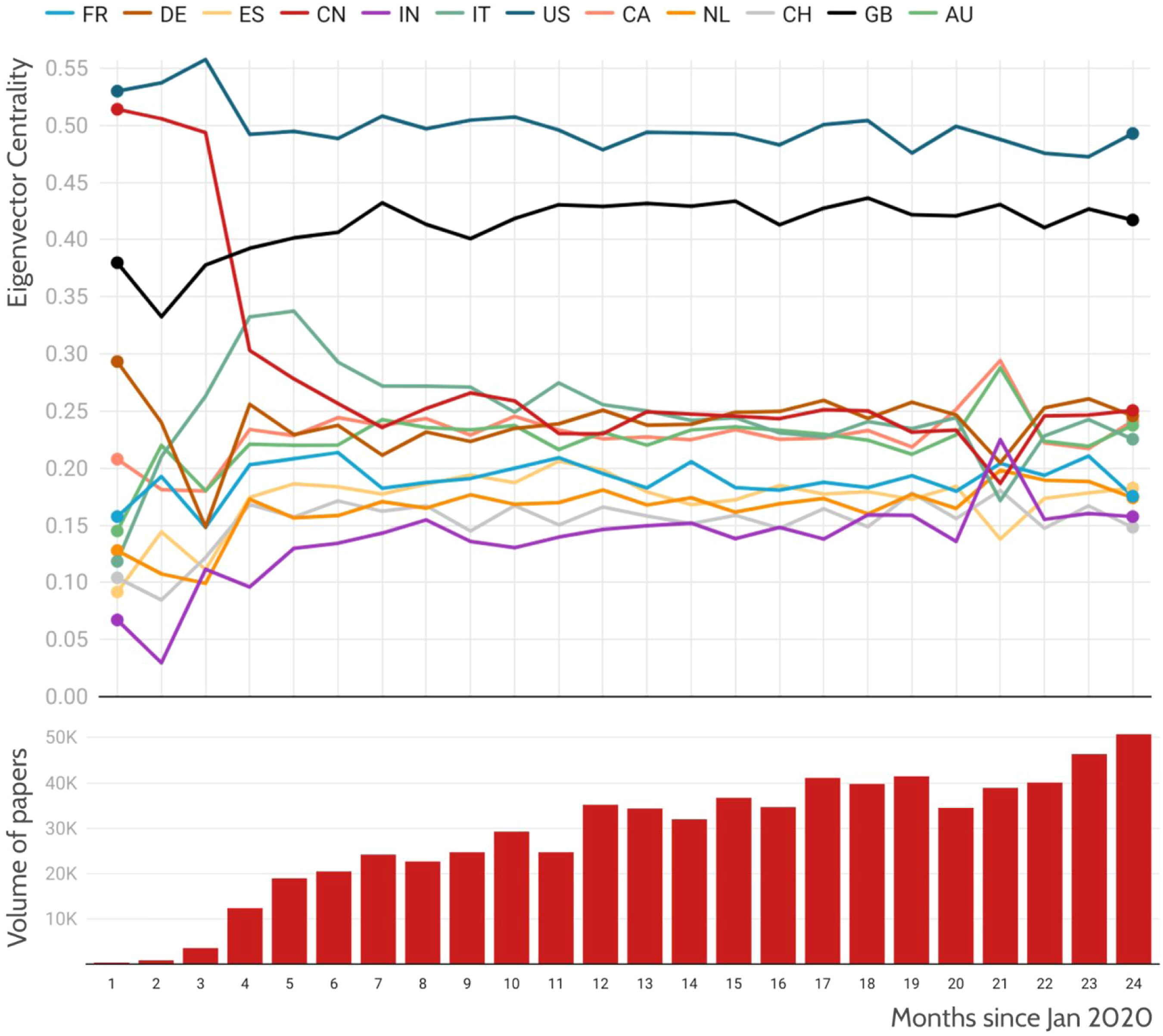
The global research community responded with speed and at scale to the emergence of COVID-19, with around 4.6% of all research outputs in 2020 related to the pandemic. That share almost doubled through 2021, to reach 8.6% of research outputs.
ArticleResearch Outreach15 December 2020
Digital Science: A more collaborative approach to research
Daniel Hook, CEO of Digital Science, looks to improve old research practices with new tools and technologies.
Articledirect.mit.edu5 December 2019
Dimensions: Bringing down barriers between scientometricians and data
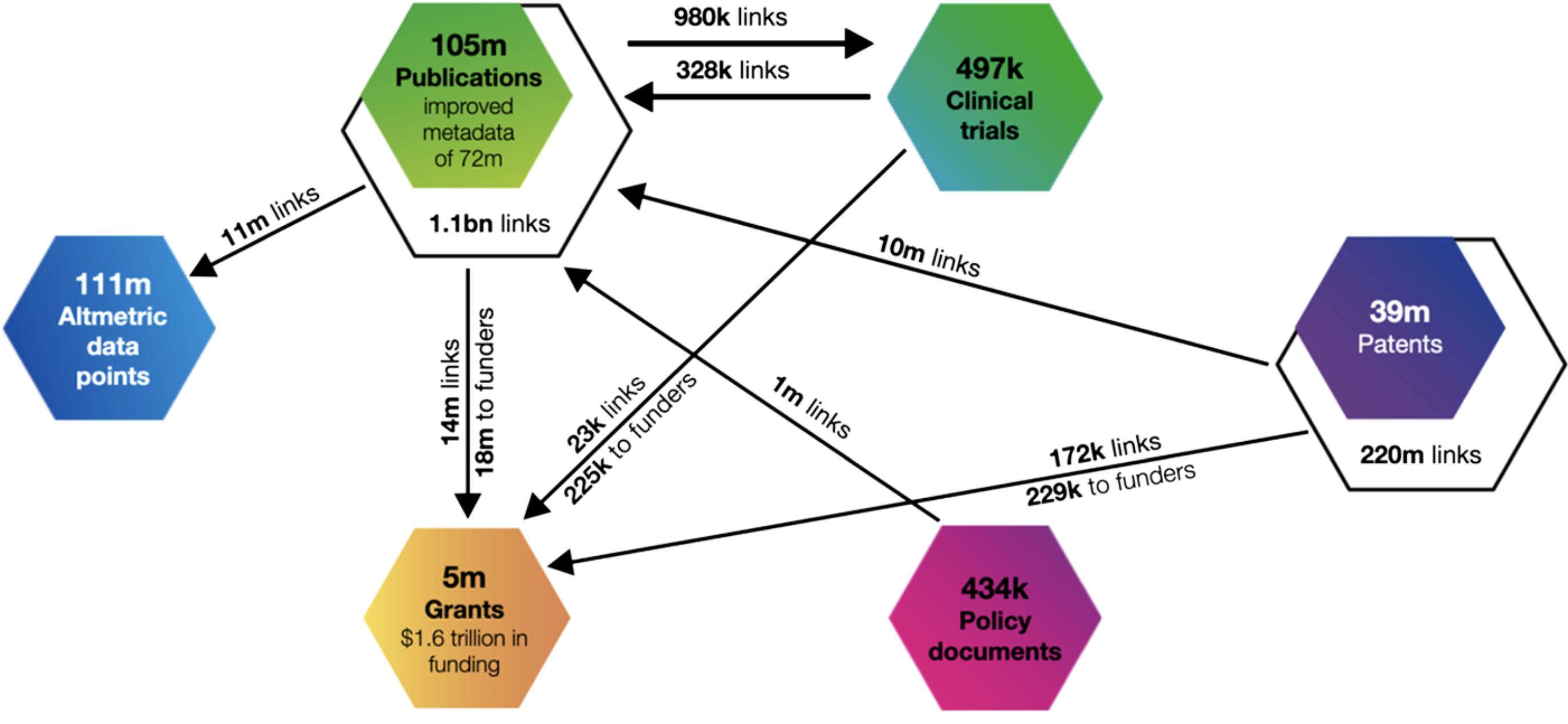
Until recently, comprehensive scientometrics data has been made available only in siloed, subscription-based tools that are inaccessible to researchers who lack institutional support and resources. As a result of limited data access, research evaluation practices have focused upon basic indicators that only take publications and their citation rates into account. This has blocked innovation on many fronts.
PaperDigital Science1 April 2019
Precision Medicine, An International Perspective
This report provides a brief overview of the area of personalised and precision medicine since the turn of the millennium, highlighting key areas of development in publication activity. It has been produced in celebration of the Russian-German Science Dialogue and in combination with Merck’s 120th Anniversary in Russia. As a result, we pay particular attention to these countries.



* ordered by publication date, which is not the same as when any of it was written.